Sound bites are not designed for complex stances
It may have to do with attention span
RandomDoug here, I want to discuss a more sober topic with you guys. It's probably going to be one of the longer posts I do, but I want to try and explain myself on this topic. So bare with me on this one.

Before getting into the nitty gritty of this post, I was struck by a certain exchange on an episode this week of The Nightly Show.
The exchange is as follows -
Larry Wilmore: Where do you guys go for news? Do you watch news anymore?
Jenn McAllister: Um, I mean, I definitely go to Twitter first, because it's...
LW: Twitter's the first place you go to find out what's happening in the world.
JM: But I do watch the news, but I think that's because like I grew up in a household that watches the news everyday. But defintiely when something happens, the first thing I think about is going to Twitter to see what's going on.
Ricky Velez: But it breaks first on Twitter. It always breaks first now because the news, they need three separate sources before they can say it.
LW: It's called journalism.
RV: Well listen... I disagree, that's old journalism. That's old school sh*t.
LW: I don't got time to do all of that bullsh*t 'fact checking'.
RV: You don't need that no more. You don't need to go to college and become a journalist. 140 characters, I got this sh*t, let's go.
[The panel goes on to bring up some good points about individuals being able to report events otherwise ignored by traditional news sources and shining a spotlight in real time.]
 My concern is the lack of appreciation for why fact-checking is considered an integral part of journalism that gets dismissed. There are a few recent high profile examples of breaking story facts going viral (and later proven incorrect). There has probably always been the drive to catch the scoop. But with ratings driven 24 hour news networks that becomes even more pronounced. Unfortunately social media in this sense has only exacerbated the problem of 'break news first', not necessary break news right, since network and cable news as noted above are constantly behind Twitter and other social media outlets when it comes the story.
 Now how this ties into my topic is how complex issues are covered, and digested by the masses. This is a country that prides itself on getting news fast, in an understandable way. It's also now expected to be entertaining, captivating and not boring (#noCSPAN). Add this to the ease in which the public can simply choose to watch the version of the news that already aligns with our views in society and mirrors our stances on issues. There is a lack of desire for a full speech, instead we want the condensed sound bite version which we can either agree with or disagree with. We'll absorb what aligns and validates our stance and and reject anything that doesn't.
This sound bite is what gets debated, not the full speech with nuanced viewpoints. This is easier to follow and allows for an easier decision of I agree or I disagree. It's quicker, less thinking, more gut reacting. It's the epitome of this Diet Coke commercial message.
Larry Wilmore: Where do you guys go for news? Do you watch news anymore?
Jenn McAllister: Um, I mean, I definitely go to Twitter first, because it's...
LW: Twitter's the first place you go to find out what's happening in the world.
JM: But I do watch the news, but I think that's because like I grew up in a household that watches the news everyday. But defintiely when something happens, the first thing I think about is going to Twitter to see what's going on.
Ricky Velez: But it breaks first on Twitter. It always breaks first now because the news, they need three separate sources before they can say it.
LW: It's called journalism.
RV: Well listen... I disagree, that's old journalism. That's old school sh*t.
LW: I don't got time to do all of that bullsh*t 'fact checking'.
RV: You don't need that no more. You don't need to go to college and become a journalist. 140 characters, I got this sh*t, let's go.
[The panel goes on to bring up some good points about individuals being able to report events otherwise ignored by traditional news sources and shining a spotlight in real time.]

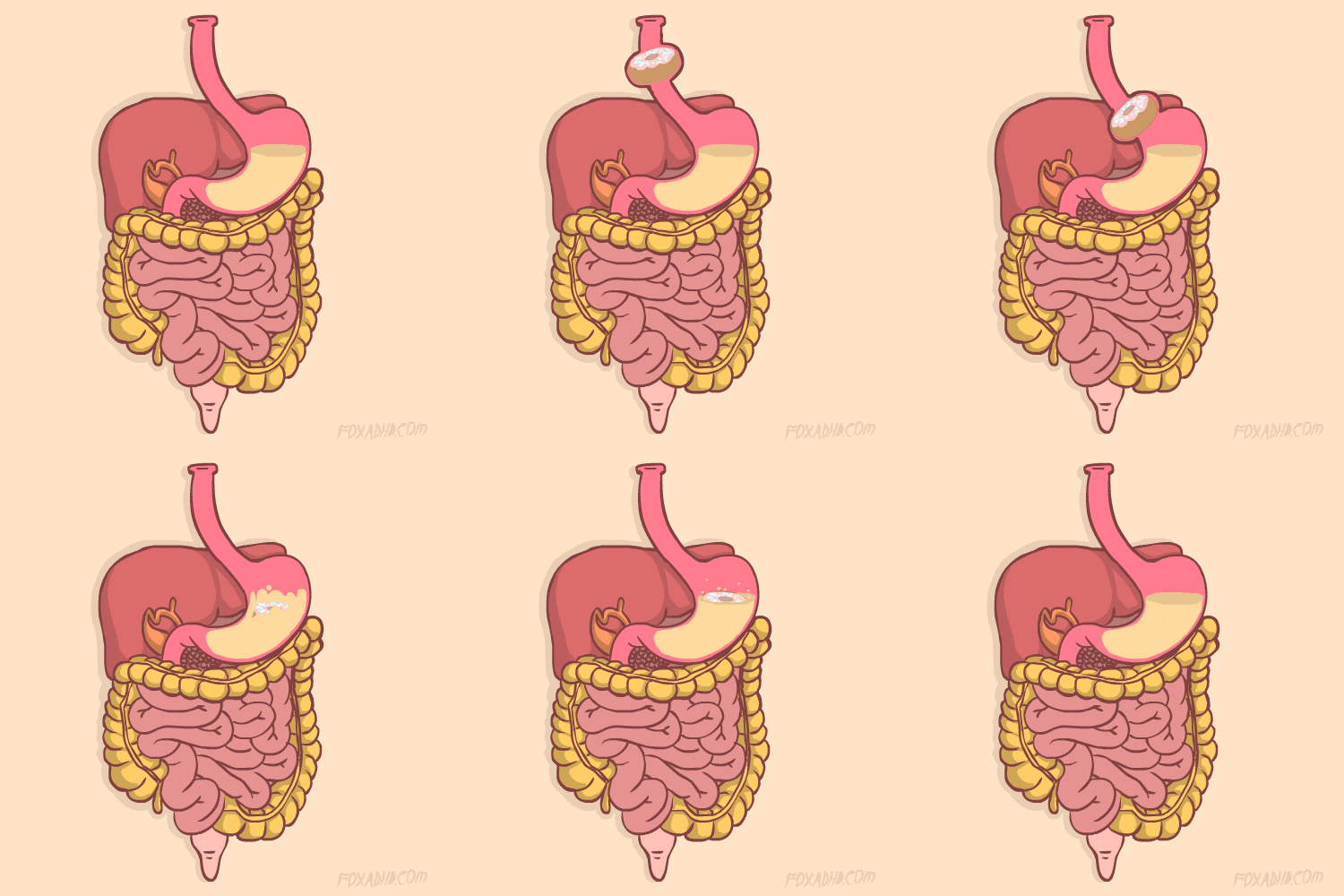
This sound bite is what gets debated, not the full speech with nuanced viewpoints. This is easier to follow and allows for an easier decision of I agree or I disagree. It's quicker, less thinking, more gut reacting. It's the epitome of this Diet Coke commercial message.
Which makes sense when you think about it. It's less presenting the facts and having us draw our own conclusions, it's more present something edible that can we can consume, because if anything, we're definitely the best in consumption.
RandomDoug out